If you need to disinfect water in Oman, you have two main choices: ultraviolet light or a chemical such as chlorine. Both kill germs. They work in very different ways, and each has gaps the other fills. A villa on a well, a café on a tank, a clinic and a hotel compound will each land on a different answer. This guide compares UV water filtration systems with chemical treatment, explains where each one fits in Oman, and shows when it makes sense to use both.
TL;DR
- UV damages the DNA of germs as water flows past a lamp. Nothing is added, and the taste does not change.
- Chlorine kills germs and leaves a residual that keeps protecting water in tanks and pipes. UV leaves no residual.
- UV needs clear water, so a sediment filter always goes in front. Chlorine needs correct dosing and checks.
- In Oman, UV suits point-of-entry and point-of-use treatment. Chemical treatment suits storage and large networks.
- Many sites use both: a residual in storage, then UV at the tap or the building inlet.
Not sure which fits your site? Talk to Our Team about your water source.
In this article
- How UV disinfection works
- How chemical treatment works
- UV vs chemical treatment side by side
- Which suits your site in Oman?
- Our UV water filtration systems
- Frequently asked questions
- Sources
How UV disinfection works
A UV steriliser is a steel chamber with a lamp inside a quartz sleeve. Water flows around the sleeve. The ultraviolet light damages the genetic material of bacteria, viruses and protozoa, so they cannot reproduce or cause infection.
The key number is the dose, measured in millijoules per square centimetre (mJ/cm²). The dose depends on lamp power, flow rate and how clear the water is. Cloudy water or scale on the sleeve shields germs from the light. That is why every UV unit needs a sediment filter in front, and why hard water may need softening first.
People often call this a "UV water filter". Strictly, UV does not filter anything. It disinfects. The filtering is done by the cartridge that goes before it.
How chemical treatment works
The most common chemical is chlorine, dosed as sodium hypochlorite or a similar product. It kills germs by attacking their cell walls and internal parts. Its big advantage is the residual: a small amount stays in the water and keeps working as the water moves through tanks and pipes.
That is how public water networks protect water over long distances. Desalinated water in Muscat, from plants such as Ghubrah II and Qurayyat, is treated before it enters the network (OPWP).
Chemical treatment has its own demands. The dose has to be measured and checked. Too little does not protect the water. Too much affects taste and smell. Chlorine can also react with natural organic matter to form by-products, which the WHO drinking water guidelines cover in detail. The WHO says disinfection should not be compromised in trying to control these by-products.
UV vs chemical treatment side by side
| UV disinfection | Chemical (chlorine) | |
|---|---|---|
| How it works | Light damages germ DNA | Chemical attacks germs |
| Added to water | Nothing | Chlorine or similar |
| Taste and smell | No change | Can change, depending on dose |
| Residual protection | None after the unit | Yes, through tanks and pipes |
| Needs clear water | Yes, filter first | Works better on clear water too |
| Works on chlorine-resistant protozoa | Yes | Less well |
| Day-to-day checks | Lamp status and pre-filter | Dose and residual readings |
| Consumables | Lamp, sleeve cleaning, pre-filter | Chemical stock, test kits |
| Best place | Building inlet or point of use | Storage tanks and large networks |
Which suits your site in Oman?
Villa or farm on a well or falaj. Studies of wells and aflaj in Wilayat Samail found them contaminated with biological content and said the water needs proper disinfection (Shaik and others, 2021). A whole-house UV unit after sediment filtration is a common choice. Where the water is also very hard, add a softener first, or scale will coat the quartz sleeve. Our guide to commercial water softeners in Oman covers sizing.
Building on mains with a roof tank. The mains arrives treated, but stored water warms up in an Oman summer and the residual fades. UV at the tank outlet or at drinking points adds a final barrier. Keep the tank clean as well. Our guide on Legionella risk in Oman buildings explains why stored water matters.
Café, clinic or office drinking point. A small point-of-use UV unit protects one line with nothing added, so coffee and drinking water taste the same.
Hotel, compound or large network. A chemical residual in storage protects long pipe runs. UV at key points adds a second barrier. Larger systems should be designed and monitored by a specialist.
Our UV water filtration systems
Our SovSafe UV sterilisers cover both scales. SovSafe SW24 treats a whole villa, rated at 5.4 m³/h. SovSafe SW60 protects a single tap at 30 mJ/cm².
For the filter that goes in front, see our Regent commercial water filters.
Sovereign Water works with local partners in Oman for delivery, installation and aftercare. UV lamps lose output over time even while they still glow, so they need changing on schedule. A maintenance plan keeps lamps, sleeves and pre-filters on time.
Want a UV system sized to your flow? Request a Quote with your water source and peak flow rate.
Frequently asked questions
Is UV better than chlorine?
Neither is better in every case. UV adds nothing and does not change taste, but it gives no protection after the unit. Chlorine protects water in storage. Many sites use both.
Does a UV water filter remove chemicals or salts?
No. UV only disinfects. It does not remove salts, metals, hardness or particles. For dissolved salts, see our guide to reverse osmosis in Oman.
Does UV work on well water in Oman?
Yes, if the water is clear. Well water should be tested by a laboratory first, then filtered and often softened before the UV unit.
How often should a UV lamp be changed?
Follow the maker's rated lamp life, usually around once a year. The lamp can still glow after its useful output has dropped.
Can I drink tap water after UV treatment?
UV deals with germs. Safe drinking water also depends on the source, the tank and the pipes. Our guide on whether tap water is safe to drink in Oman covers the full picture.
Choose the right disinfection for your site
Tell us where your water comes from, how much you use and what it is for. We will recommend a disinfection set-up and send a quotation.
Sources
- World Health Organization, Guidelines for drinking-water quality: https://www.who.int/publications/i/item/9789240045064
- Oman Power and Water Procurement, Water 7-Year Statement 2026 to 2032, Issue 20: https://omanpwp.om/storage/files/1/7-year-statement/69e47d720f22b.pdf
- Shaik, F. and others, Assessment of Falaj Water Quality, Asian Journal of Water, Environment and Pollution, 2021: https://www.accscience.com/journal/AJWEP/18/1/10.3233/AJW210004
Products mentioned in this article
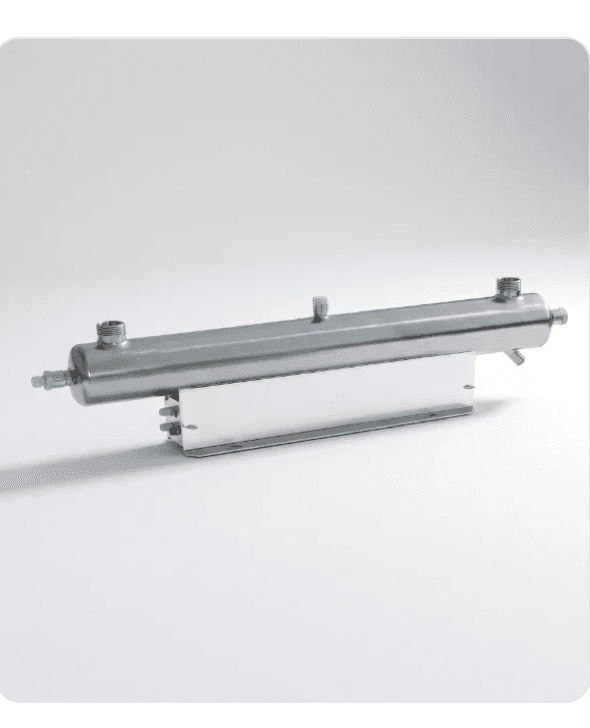
A stainless steel UV-C steriliser for large residences and light commercial sites: up to 5.4 m³/h on a 1.5 inch…
View product →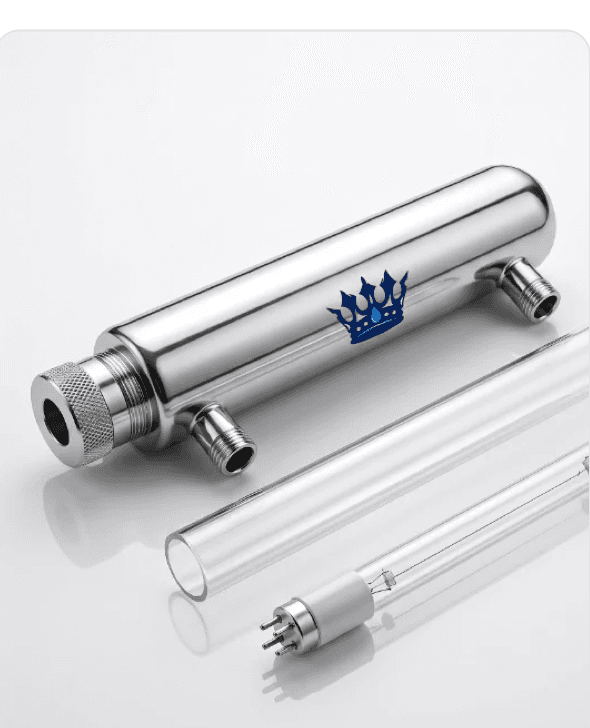
A compact point-of-use UV steriliser for a single outlet: a 270 mm AISI 304 stainless chamber and one T510 UV-C lamp…
View product →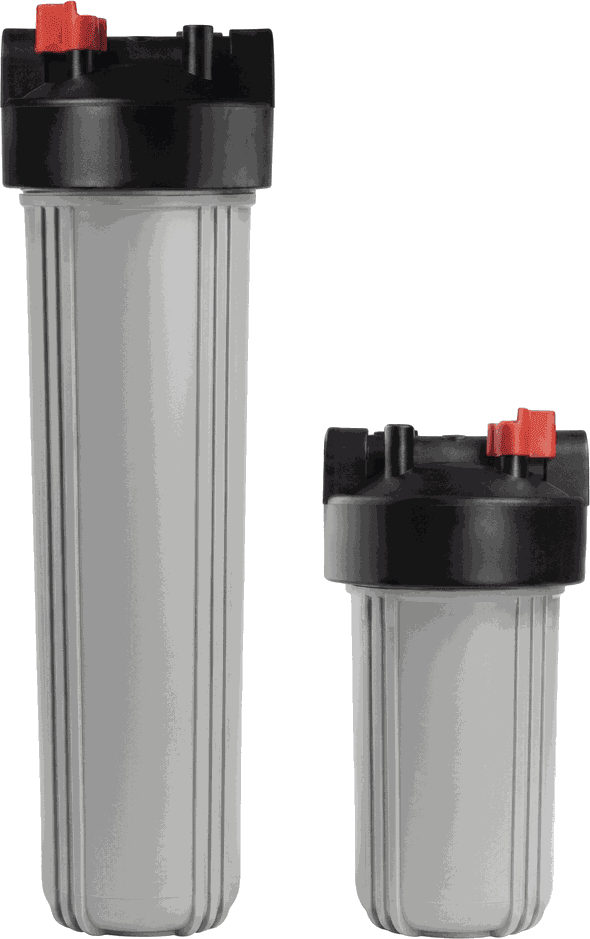
Whole-site filter housings for houses, cafés and restaurants: the Big Grey range takes 4.5 × 20 inch and 4.5 × 10…
View product →