Legionella bacteria grow in water between 20 and 50°C, and grow best at about 35°C. In most countries the main worry is hot water that is not hot enough. In Oman there is a second problem: cold water that is not cold. A roof tank in a Muscat summer, a long pipe run through a hot ceiling void, or a little-used tap in a staff room can all sit in the danger range for days. This guide explains where Legionella risk builds up in Oman buildings and food outlets, and the practical steps that keep stored water safe from tank to tap.
TL;DR
- The WHO says Legionella lives and grows in water at 20 to 50°C, best at 35°C.
- In Oman's heat, "cold" water in roof tanks and ceiling pipes can sit in that range for long periods.
- The highest-risk places are warm stored water, dead legs, little-used outlets, showers, cooling towers and spray devices.
- Control means clean tanks, short pipe runs, regular flushing, correct hot water temperatures and disinfection where needed.
- UV sterilisers disinfect water with nothing added, but they work alongside good hygiene, not instead of it.
Concerned about stored water in your building? Talk to Our Team about disinfection options.
In this article
- What Legionella is and how people catch it
- Why Oman's heat raises the risk
- High-risk spots in buildings and food outlets
- How to control Legionella
- Where UV disinfection fits
- Legionella testing
- Frequently asked questions
- Sources
What Legionella is and how people catch it
Legionella is a group of bacteria found naturally in fresh water. In building water systems, it can multiply to dangerous levels. People catch Legionnaires' disease, a serious form of pneumonia, by breathing in tiny droplets of contaminated water, for example from a shower, a spray tap, a fountain or a cooling tower. It is not caught by drinking the water in the normal way, and it does not pass from person to person (WHO, Legionellosis fact sheet).
Older people, smokers and people with weak immune systems are most at risk. That is why hotels, hospitals, care homes and gyms take it seriously.
Why Oman's heat raises the risk
The WHO says the bacteria grow in water at 20 to 50°C, with an optimum of 35°C. Most building guidance aims to keep cold water below 20°C and hot water above 50°C, so that water spends as little time as possible in the middle.
In Oman, keeping cold water cold is hard:
- Roof tanks heat up in direct sun through the summer months.
- Pipes in ceiling voids and risers pass through hot spaces before they reach the tap.
- Low use in villas, offices and hotel rooms that sit empty lets water stand and warm up.
- Mixed supplies from tankers can bring sediment, which gives bacteria somewhere to settle.
The mains water itself is treated before supply. Muscat's water comes mainly from desalination plants and is disinfected before it enters the network. The risk builds inside the building, where the owner is in charge of the water.
High-risk spots in buildings and food outlets
| Location | Why it is a risk | What helps |
|---|---|---|
| Roof and ground tanks | Warm, still water and sediment | Shade or insulate, cover, clean on a schedule |
| Dead legs and capped pipes | Water never moves | Remove them |
| Little-used taps and showers | Water stands for days | Flush weekly |
| Hot water heaters set too low | Water sits in the growth range | Keep stored hot water hot, per the system's design |
| Shower heads and spray taps | Make droplets people breathe | Clean and descale regularly |
| Cooling towers | Warm water and spray | Specialist treatment and monitoring |
| Ice machines and drink dispensers | Warm parts and biofilm | Sanitise on the maker's schedule |
| Decorative fountains and misters | Spray in public areas | Treat, clean and drain when not in use |
Food outlets have extra points to check: pre-rinse spray arms in the kitchen, ice makers, coffee machines and any misting systems on terraces.
How to control Legionella
A good control plan has a few simple parts.
- Know your system. Draw a simple map: tanks, heaters, pipes, outlets and any little-used areas.
- Name a responsible person. Someone owns the checks and the records.
- Keep tanks clean and cool. Cover them, shade or insulate them where you can, and clean them on a schedule.
- Keep water moving. Flush little-used outlets every week. Remove dead legs.
- Get hot water temperatures right. Follow the heater and system design. Check them regularly.
- Disinfect where needed. UV at the point of entry or use, or chemical treatment by a specialist for larger systems.
- Keep records. Temperatures, flushing, cleaning and service dates.
The WHO guide on water safety in buildings sets out this approach in full. For a hotel, hospital or large venue, have a competent specialist carry out a Legionella risk assessment.
Where UV disinfection fits
A UV steriliser passes water past an ultraviolet lamp. The light damages the DNA of bacteria and viruses so they cannot multiply. Nothing is added to the water, and the taste does not change.
UV is useful in Oman for:
- Water drawn from a well, a falaj or a tanker
- Water leaving a roof or ground tank
- A single drinking tap, dispenser or vending machine
Our SovSafe UV sterilisers cover a whole villa or a single outlet.
UV needs clear water to work, so a sediment filter always goes in front. It also treats only the water passing through it, so it does not clean biofilm already in the pipes after it. That is why tank cleaning and flushing still matter. Our guide to UV disinfection vs chemical treatment compares the options.
Sovereign Water works with local partners in Oman for delivery, installation and aftercare.
Want UV for your building? Request a Quote with your water source and flow rate.
Legionella testing
Sovereign Water does not test water. If you need Legionella testing, use an accredited laboratory, and take samples from the places on your risk map, such as the far end of a hot water loop, a little-used shower and the tank outlet. Testing shows whether your controls are working. It does not replace them.
Pre-filters, lamps and sleeves on UV units need changing on schedule. A maintenance plan keeps that on time. For drinking water in the building, see our guide on whether tap water is safe to drink in Oman.
Frequently asked questions
What temperature does Legionella grow at?
The WHO says 20 to 50°C, with an optimum of 35°C.
Can you catch Legionnaires' disease from drinking water?
It is caught by breathing in contaminated droplets, for example from showers or sprays. Drinking water in the normal way is not the usual route.
Why is Legionella a concern in hot countries like Oman?
Cold water in roof tanks and ceiling pipes can warm into the range where the bacteria grow, especially in summer.
Does UV kill Legionella?
UV inactivates bacteria in the water passing through it. It does not remove biofilm already in the pipes, so it works best with tank cleaning and flushing.
How often should water tanks be cleaned?
Follow your risk assessment and local rules. Tanks in hot conditions or with sediment from tankers often need more frequent cleaning.
Keep your stored water safe
Tell us about your building, your tanks and your water source. We will recommend a disinfection set-up and send a quotation.
Sources
- World Health Organization, Legionellosis fact sheet: https://www.who.int/news-room/fact-sheets/detail/legionellosis
- World Health Organization, Water safety in buildings: https://www.who.int/publications/i/item/9789241548106
- Oman Power and Water Procurement, Water 7-Year Statement 2026 to 2032, Issue 20: https://omanpwp.om/storage/files/1/7-year-statement/69e47d720f22b.pdf
Products mentioned in this article
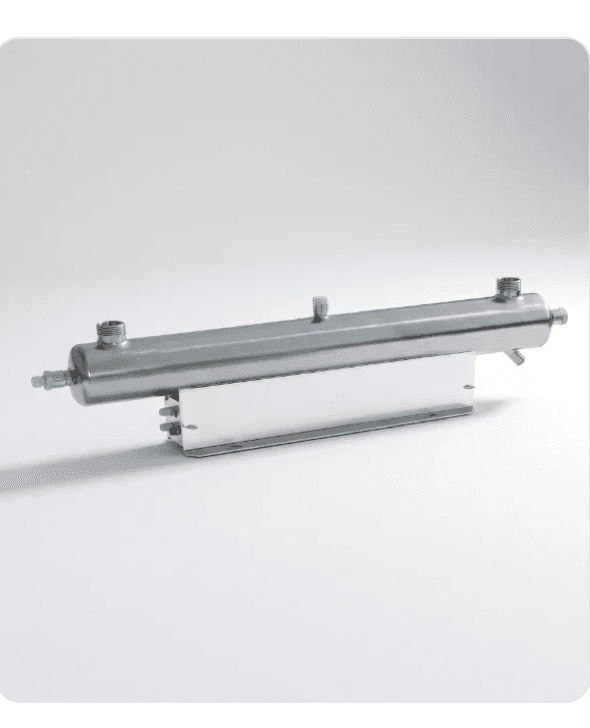
A stainless steel UV-C steriliser for large residences and light commercial sites: up to 5.4 m³/h on a 1.5 inch…
View product →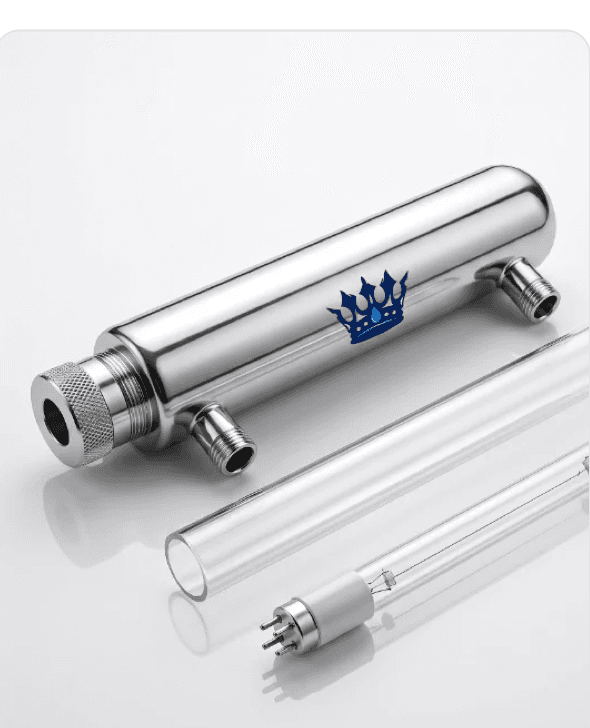
A compact point-of-use UV steriliser for a single outlet: a 270 mm AISI 304 stainless chamber and one T510 UV-C lamp…
View product →