Ask whether Oman has hard water and the answer depends on where your water comes from. In Muscat and along the coast, most mains water is made from seawater, and it arrives with few hardness minerals. Inland, and wherever a building relies on a well or tanker deliveries, the picture can be very different. One study in Al Dhahirah measured groundwater at more than three times the level usually classed as very hard. This guide explains the two kinds of supply, where scale shows up in a building, and how to deal with it.
TL;DR
- Coastal mains water in Oman comes mainly from desalination plants, such as Ghubrah II and Qurayyat for Muscat.
- Well and tanker water is a different story. One 2024 study in the Al Masaraat basin, Al Dhahirah, found average hardness of about 659 mg/l.
- Anything above 180 mg/l counts as very hard on the US Geological Survey scale.
- Scale forms where water is heated or evaporates: water heaters, kitchens, laundries and cooling plant.
- A water softener removes hardness. Test the water first, then size the system to the building.
Not sure what is in your supply? Talk to Our Team and tell us where your water comes from.
In this article
- Two kinds of water supply in Oman
- What counts as hard water?
- Where scale shows up in a building
- How a water softener stops scale
- What to check before you choose a system
- Keeping the system working
- Frequently asked questions
Two kinds of water supply in Oman
Most buildings in Oman get their water in one of two ways.
The first is the public mains, run by Nama Water Services. Nama serves more than 4 million people and relies mainly on desalinated seawater. Muscat's supply comes mainly from the Ghubrah II and Qurayyat plants, plus transfers from the Barka zone (OPWP, Water 7-Year Statement 2026–2032). Water made by reverse osmosis starts with very little calcium and magnesium, so on its own it does not scale much.
The second is groundwater, from private wells, farm supplies or tanker deliveries. This water has spent a long time in contact with rock and picks up minerals along the way. A 2024 study of 11 sites in the Al Masaraat basin, Al Dhahirah Governorate, found average total hardness of about 659 mg/l, which the authors class as very hard (Al Hatmi and others, 2024). That is one basin, not every well in the country, but it shows how hard local groundwater can be.
Many buildings sit between the two. A site on mains may top up from a tanker in summer, or a hotel outside town may mix mains and well water. That is why two buildings in the same governorate can have very different water.
What counts as hard water?
Hardness is measured in milligrams per litre (mg/l) of calcium carbonate. The US Geological Survey sets out four bands.
| USGS band | Hardness (mg/l as calcium carbonate) | What it means for a building |
|---|---|---|
| Soft | 0 to 60 | Little scale risk on its own |
| Moderately hard | 61 to 120 | Some scale in water heaters over time |
| Hard | 121 to 180 | Regular scale on outlets and heating surfaces |
| Very hard | More than 180 | Fast build-up in anything that heats water |
Source: USGS, Hardness of Water.
The figure from the Al Dhahirah study sits far above the top band. At that level, a softener is usually the first piece of treatment a building needs.
The only way to know your own number is to test it. Ask a laboratory for total hardness, total dissolved solids, iron and pH on a sample taken after your storage tank. If you switch between mains and tanker water, test both.
Where scale shows up in a building
Hard water causes no harm while it stays cold in a pipe. The trouble starts when it is heated or left to dry, because calcium carbonate then comes out of the water and sticks to surfaces.
| Where | What you see | Why it matters |
|---|---|---|
| Water heaters and calorifiers | Slow heat-up, noisy elements | Scale insulates the element, so it uses more power and fails sooner |
| Commercial dishwashers | Cloudy glasses, blocked spray arms | Rewashing, more detergent, service calls |
| Coffee machines and combi ovens | Error codes and descale alerts | Downtime in the busiest part of the day |
| Laundries | Stiff, grey linen | More chemical use and shorter linen life |
| Cooling plant | Coated condenser tubes | The chiller works harder for the same cooling |
| Showers, taps and mixers | White crust, weak flow | Complaints from guests and tenants |
Rooftop tanks add to the problem in summer. Water that has sat in the sun reaches the heater already warm, and sediment in the tank gives scale something to grip.
How a water softener stops scale
A water softener is the treatment that removes hardness. Water passes through a bed of resin beads. The beads hold on to calcium and magnesium and release sodium in their place. Softened water cannot form limescale. When the beads are full, the softener rinses them with salt water and goes back into service.
One softener on the incoming supply protects every heater, outlet and machine after it. Our Regal water softeners cover single-vessel units for smaller sites through to twin-vessel systems for buildings that cannot be without treated water.
A softener does one job. It does not lower total dissolved solids, and it is not a disinfection step. Where well water is high in salts, reverse osmosis is added after the softener. Where a well or falaj is the source, the water should also be tested for germs, and disinfection planned if needed.
For a single coffee machine or a small kitchen on mains water, a scale inhibitor cartridge can be enough. It leaves the minerals in but stops them sticking to hot surfaces. For a whole building, a softener is the practical choice.
Want to size a system? Request a Quote with your water test and daily use.
What to check before you choose a system
A short list of facts decides the right softener for a building.
- Hardness and total dissolved solids from a current laboratory test
- Daily water use, and the busiest hour of the day
- Whether the supply is mains, well, tanker or a mix
- Which outlets need soft water, and which should stay on an untreated line
- Space for the vessels and salt, a drain nearby and a power point
- Whether the building can be without treated water while the softener regenerates
That last point decides between a single and a twin system. A single vessel goes offline for a short time while it regenerates. A twin system always has one vessel in service, which suits hotels, hospitals and anything that runs around the clock. Our commercial water softener sizing guide works through the numbers step by step.
Sovereign Water works with local partners for delivery, installation and aftercare across Oman. A site survey is chargeable and gives a design based on your building, not a guess.
Keeping the system working
A softener only protects the building while it has salt and the right settings.
- Check the salt level every week on busy sites
- Retest the treated water if your source changes, for example from mains to tanker
- Change any pre-filters before they block
- Have the valve settings and resin checked at planned intervals
A maintenance plan puts these checks on a calendar so they do not depend on someone remembering. Our guide to filter and RO membrane replacement lists the warning signs for each part.
For the wider picture, see water treatment for businesses in Oman. For drinking water, see is tap water safe to drink in Oman.
Frequently asked questions
Does Oman have hard water?
It depends on the source. Coastal mains water is mostly desalinated and low in hardness. Groundwater can be very hard. One study in Al Dhahirah found an average of about 659 mg/l.
Is Muscat tap water hard?
Muscat's mains supply comes mainly from desalination plants, so it is generally low in hardness. Buildings that top up from tankers or wells can still have hard water.
Is hard water safe to drink?
Hardness on its own is not a health concern. The problem for a building is scale in heaters, pipes and machines.
Does a water softener remove salt from well water?
No. A softener removes hardness minerals, not total dissolved solids. Reverse osmosis is the step that lowers dissolved salts.
Single or twin softener?
A single softener goes offline briefly while it regenerates. A twin system keeps one vessel in service all the time. Sites that run day and night usually choose a twin.
Ask Sovereign Water about hard water in your building
Tell us where your water comes from, what you need to protect and how much you use. We will recommend a softener and send a quotation.
Sources
- Oman Power and Water Procurement, Water 7-Year Statement 2026–2032, Issue 20: https://omanpwp.om/storage/files/1/7-year-statement/69e47d720f22b.pdf
- Oman Observer, Nama inaugurates commercial operation of Al Ghubra temporary station, 17 Jan 2024: https://www.omanobserver.om/ampArticle/1148377
- Al Hatmi, F., Embong, Z. and Gismelseed, A., 2024, International Journal of Environmental Analytical Chemistry: https://doi.org/10.1080/03067319.2024.2344058
- US Geological Survey, Hardness of Water: https://www.usgs.gov/special-topics/water-science-school/science/hardness-water
Products mentioned in this article
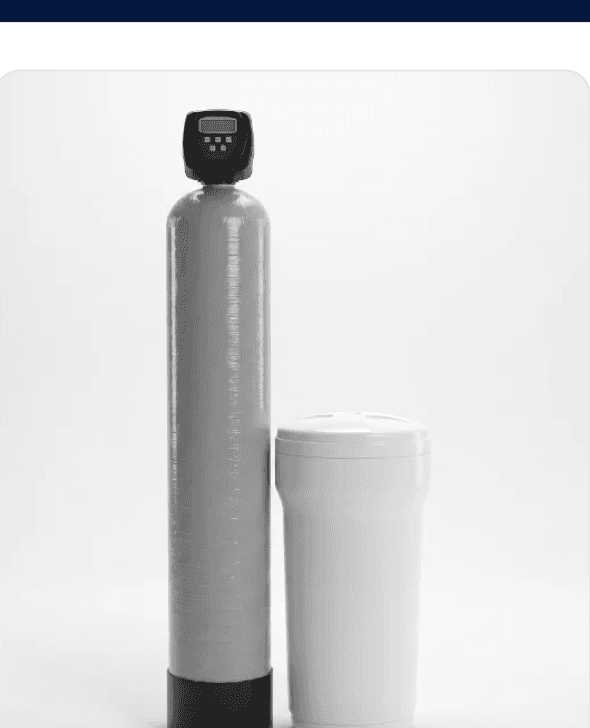
A high-capacity, professional-grade water softener for demanding residential, commercial and light-industrial use…
View product →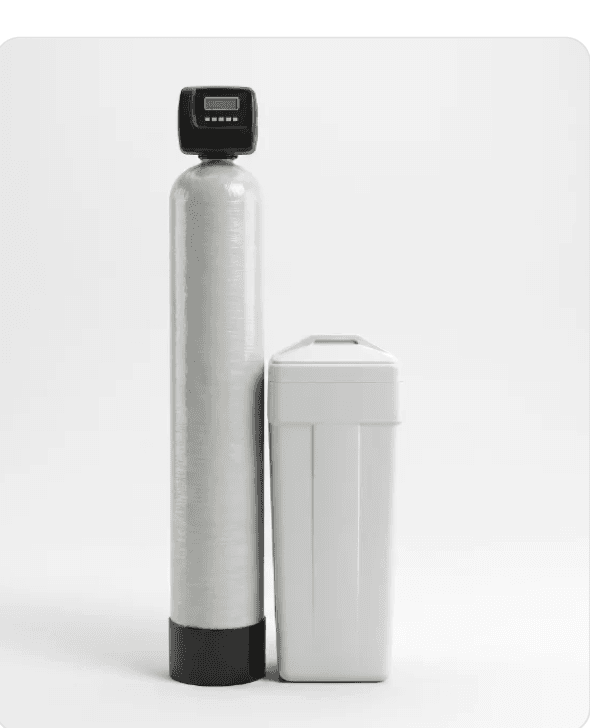
A high-capacity, floor-standing water softener built around a 10 x 54 inch pressure tank and a CE 1 inch control…
View product →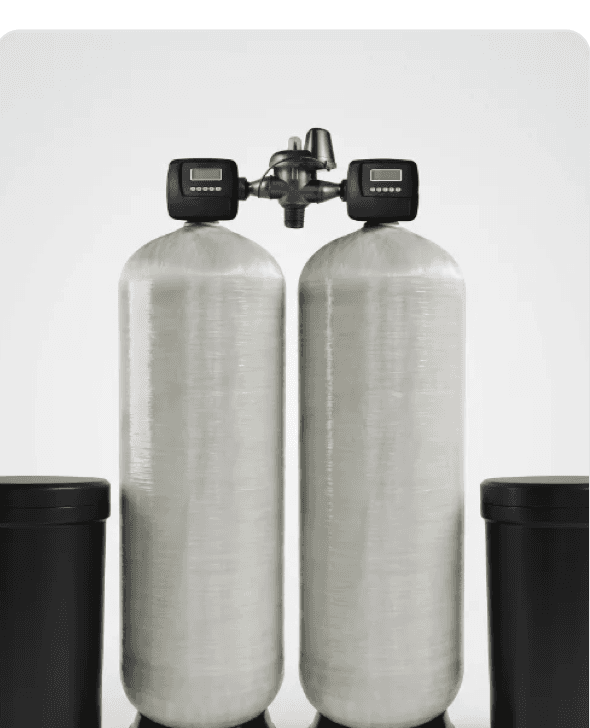
Two 36 x 72 inch softening vessels working in alternation on a single 2 inch twin connector, each with its own 570…
View product →