Coffee is about 98% water, so the water decides how your espresso tastes and how long your machine lasts. Cafés in Oman face two very different problems. Some sites get desalinated mains water that is very low in minerals, plus a tank taste. Others get hard well or tanker water that scales a boiler in weeks. Both can damage an espresso machine, in opposite ways. This guide explains what water does to a coffee machine, what Oman's water sources mean for a café, and how to choose the right coffee machine water filter.
TL;DR
- Hard water leaves scale in boilers, valves and jets. Very soft or pure water can corrode metal parts.
- Both upset temperature and flow, which spoils extraction and raises repair bills.
- The Specialty Coffee Association targets about 150 ppm of dissolved solids, with a range of about 75 to 250.
- Match the filter to your water: carbon and scale control on mains, RO with blending on hard or variable water.
- Change cartridges by rated litres, not by guesswork, and keep a log.
Running a café in Oman? Talk to Our Team about water for your machine.
In this article
- What Oman's water means for a coffee shop
- Five ways poor water damages a coffee machine
- What the right water looks like
- Choosing a coffee machine water filter
- Service and records
- Frequently asked questions
- Sources
What Oman's water means for a coffee shop
Mains water from desalination. Muscat's supply comes mainly from the Ghubrah II and Qurayyat reverse osmosis plants, plus transfers from Barka (OPWP). Desalinated water starts low in minerals. It is stabilised before supply, but by the time it has sat in a warm roof tank it can carry sediment and a stale taste.
Well and tanker water. Groundwater can be very hard. One study in the Al Masaraat basin, Al Dhahirah, found average hardness of about 659 mg/l (Al Hatmi and others, 2024). Water like this will scale an espresso boiler quickly without treatment.
Mixed supply. Many sites switch between mains and tanker water when supply is short. The water reaching the machine then changes from week to week, which makes coffee taste inconsistent and catches out a filter chosen for one source only.
Measure the water at your machine. A TDS meter gives a quick reading. A laboratory test gives hardness, alkalinity and chloride as well. Our guide to TDS and ppm in Oman drinking water explains the numbers.
Five ways poor water damages a coffee machine
1. Scale cuts heating efficiency
Calcium and magnesium drop out of hard water as it heats. Scale coats the boiler element and walls. The element has to work harder to heat the water, which uses more power and shortens its life.
2. Blockages slow the flow
Flakes of scale travel through the machine and lodge in flow meters, valves, jets and the group head. Shots run slow or unevenly, and steam wands lose pressure.
3. Unstable temperature spoils extraction
Scale on sensors and elements makes temperature swing. Espresso extracted too hot tastes bitter. Too cool, it tastes sour. Staff end up chasing the grind when the real problem is the water.
4. Very pure water attacks metal
Water with almost no minerals is aggressive. It can pull metal from copper and brass parts in the boiler and pipework over time. The WHO drinking water guidelines note that demineralised water can be corrosive to pipes and fittings. That is why straight RO water is rarely fed to an espresso machine without blending or remineralising.
5. Chloride and tank taste spoil the cup
Chlorine and a stale tank taste carry straight into the coffee. High chloride can also attack stainless steel boilers. A carbon stage removes chlorine and taste. Chloride needs RO to remove it.
What the right water looks like
The Specialty Coffee Association water standard targets:
| Measure | SCA target | Acceptable range |
|---|---|---|
| Total dissolved solids | About 150 ppm | About 75 to 250 ppm |
| Odour | Clean, fresh | |
| Colour | Clear | |
| Chlorine | 0 |
Your machine maker will also have its own water specification, often with limits for hardness, alkalinity and chloride. Meet both, and the machine warranty stays on safe ground.
Choosing a coffee machine water filter
| Your water | What to fit |
|---|---|
| Mains, low minerals, tank taste | Carbon filter with light scale control |
| Mains with some hardness | Scale-control cartridge sized by hardness |
| Hard well or tanker water | RO with blending to bring TDS into range |
| Changes between sources | RO with blending, so the output stays steady |
Our food and beverage water solutions cover each route.
Everpure Claris cartridges tailor carbonate hardness for coffee, espresso and steam equipment, and come in sizes to match your water and volume.
Everpure Fibredyne FC takes out tank taste and chlorine and holds back scale, for espresso machines and ice makers.
Noble RO 60 makes 60 L/h with a TDS regulator, so you can dial in the reading your machine needs.
Sovereign Water works with local partners in Oman for delivery, installation and aftercare.
Want water that suits your machine? Request a Quote with your machine model and a TDS reading.
For a full café or kitchen set-up, including ice and steam ovens, see our guide to reverse osmosis for restaurants in Oman.
Service and records
- Change cartridges by litres. Most coffee cartridges are rated by volume at a given hardness. A flow meter tells you when they are due.
- Check TDS weekly. A rising or falling reading is an early warning.
- Descale only when needed. Good water treatment means less descaling, which is hard on machine parts.
- Keep a log. Date, cartridge, TDS and meter reading.
Our maintenance plans keep cartridges and membranes on schedule. Our guide to filter and RO membrane replacement in Oman lists the warning signs.
Frequently asked questions
Do I need a water filter for my coffee machine in Oman?
Yes. Mains water carries tank taste and sediment, and well or tanker water can be very hard. A filter protects the machine and the flavour.
What is an Everpure filter?
Everpure is a range of foodservice water filters. Cartridges such as Claris and Fibredyne are made for coffee, espresso, steam and ice equipment.
Is RO water good for coffee?
Straight RO water is too low in minerals for good coffee and can be aggressive to metal. RO with blending or remineralising, set to the right TDS, works well.
What TDS is best for espresso?
The Specialty Coffee Association targets about 150 ppm, within a range of about 75 to 250. Follow your machine maker's spec too.
How often should coffee machine filters be changed?
By the rated litres for your water hardness, or at least as often as the maker says. Busy cafés may need changes more often.
Protect your coffee and your machine
Tell us your machine model, your water source and how many cups you serve. We will recommend a filter and send a quotation.
Sources
- Specialty Coffee Association, Coffee standards (water quality): https://sca.coffee/research/coffee-standards
- World Health Organization, Guidelines for drinking-water quality: https://www.who.int/publications/i/item/9789240045064
- Oman Power and Water Procurement, Water 7-Year Statement 2026 to 2032, Issue 20: https://omanpwp.om/storage/files/1/7-year-statement/69e47d720f22b.pdf
- Al Hatmi, F., Embong, Z. and Gismelseed, A., International Journal of Environmental Analytical Chemistry, 2024: https://doi.org/10.1080/03067319.2024.2344058
Products mentioned in this article
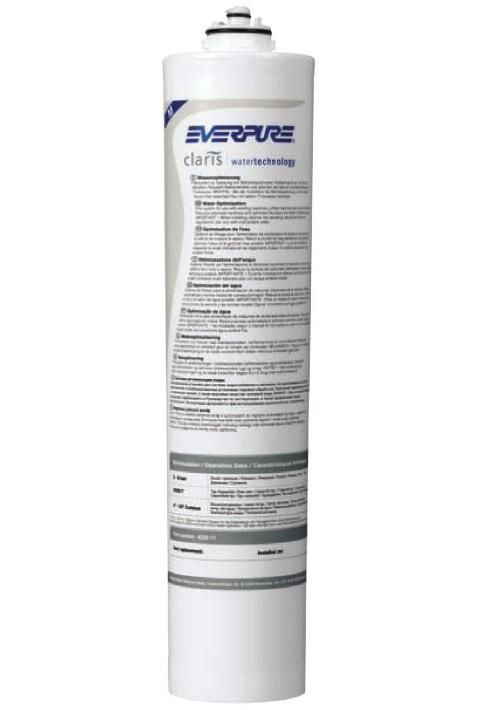
The Everpure Claris Medium is a replacement cartridge that tailors carbonate hardness for coffee, espresso and steam…
View product →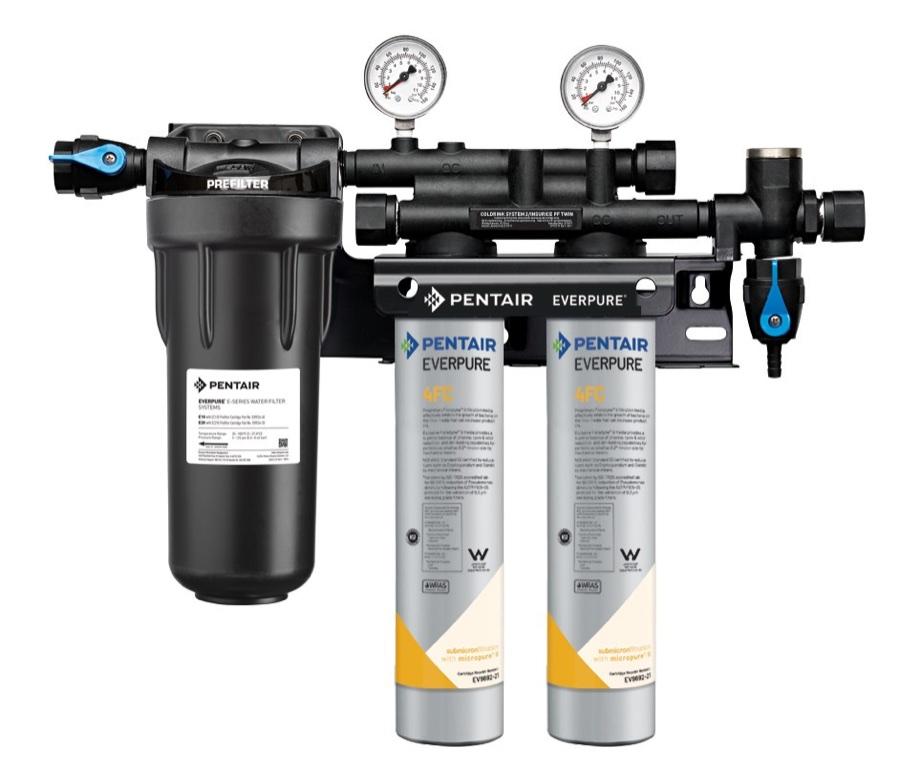
Everpure's high-performance FC systems deliver consistent quality water for coffee and ice: Fibredyne bacteriostatic…
View product →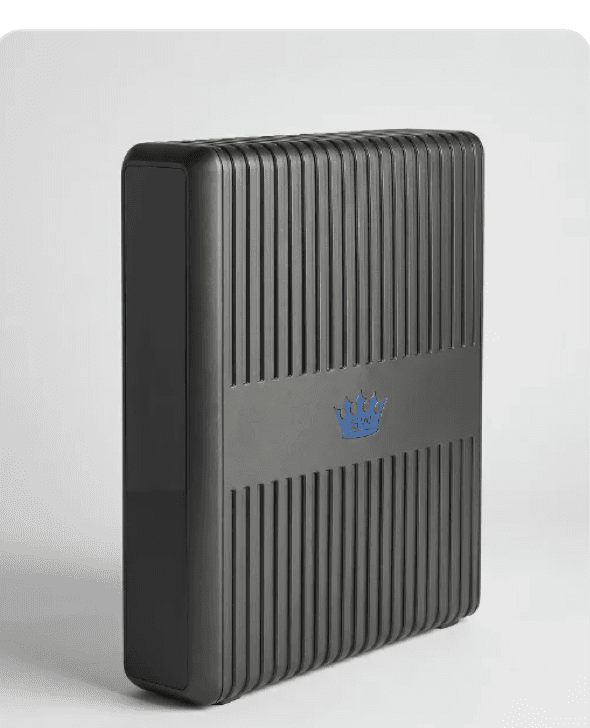
Our compact reverse osmosis system for sites that need premium water in tight spaces: 60 litres an hour from a slim…
View product →